
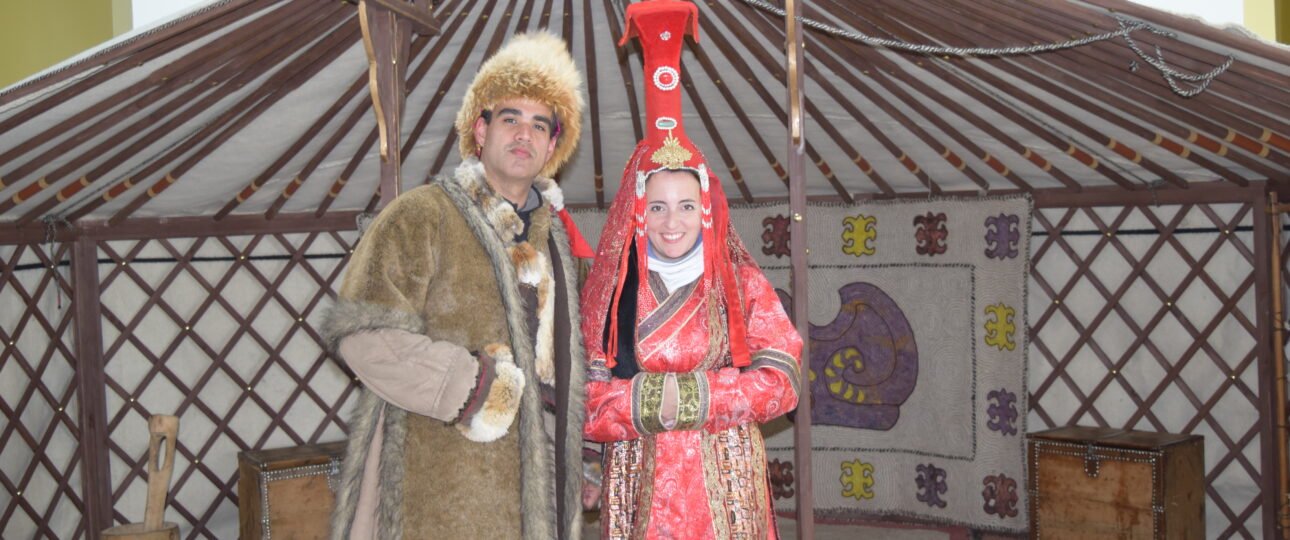
The Mongolian Deel is a traditional garment that has been worn for centuries, embodying both practicality and cultural identity. It is a long, robe-like tunic made from thick fabric, often wool or cotton, designed to withstand Mongolia’s extreme climate. The deel is fastened with a sash or belt at the waist, which not only secures the garment but also serves as a place to tuck small items like knives or money. Its wide sleeves and loose fit make it comfortable for horseback riding and daily work, reflecting the nomadic lifestyle of Mongolians.
Unlike modern clothing, the deel is deeply tied to heritage and symbolism. The colors and patterns often indicate social status, regional origin, or even special occasions. For example, bright silk deels are worn during festivals like Naadam, while simpler, darker ones are used for everyday life. Modern clothing, by contrast, is largely functional and fashion-driven, with little cultural meaning attached to its design. The deel, therefore, is not just clothing—it is a statement of identity and tradition.
Another key difference lies in adaptability. Modern jackets and trousers are designed for urban convenience, but they lack the multifunctional qualities of the deel. The deel’s long skirt-like bottom protects against wind and dust, while the thick fabric provides insulation in winter and breathability in summer. Its belt allows flexibility, making it suitable for both work and celebration. Tourists often find it fascinating that one garment can serve so many purposes, unlike modern outfits that are specialized for different settings.
For visitors, wearing a deel offers a chance to connect with Mongolian culture in a tangible way. It feels distinct from slipping into jeans or a T-shirt because it carries centuries of history and tradition. Tourists often remark on the sense of elegance and authenticity it provides, especially when paired with traditional boots and hats. Experiencing the deel firsthand highlights the contrast between modern global fashion and Mongolia’s enduring cultural attire, making it a memorable part of any journey.
What are the changes compared with the ancient period?
The Mongolian deel has changed significantly from ancient times to today: once a purely practical garment for warriors and nomads, it is now a cultural symbol worn mostly at festivals and special occasions, often made from modern fabrics and featuring decorative designs. The biggest differences are in materials, usage, and social meaning.
Ancient Deel
- The deel dates back over 2,000 years, with evidence from the Xiongnu period showing its use among steppe warriors and nomadic tribes.
- Traditionally made from thick wool, felt, or animal hides to withstand Mongolia’s harsh climate.
- Designed for horseback riding, herding, and survival in extreme weather. The long robe protected against wind and dust, while the belt held tools and weapons.
- Colors and patterns often indicated tribal affiliation, rank, or social status. Nobles wore silk or brocade deels, while common herders wore simpler wool versions.
Modern Deel
- Today, deels are often made from cotton, silk, or synthetic fabrics, making them lighter and more comfortable. Decorative embroidery and bright colors are common, especially for festive wear.
- In rural areas, herders still wear deels daily, but in cities, they are mostly worn by elders or during cultural events like Naadam, weddings, or national holidays.
- Contemporary designers blend traditional deel styles with modern tailoring, creating shorter versions or pairing them with Western clothing. This fusion keeps the deel relevant in modern Mongolia.
- The Deel has shifted from being a necessity to a cultural emblem, representing national pride and heritage rather than social hierarchy.
Conclusion
The ancient deel was a survival garment, essential for nomadic life and warfare, while the modern deel is a cultural symbol, blending tradition with fashion. Tourists will notice that while the shape remains similar, the purpose has shifted: from everyday necessity to a proud expression of Mongolian identity.

Hi, this is a comment.
To get started with moderating, editing, and deleting comments, please visit the Comments screen in the dashboard.
Commenter avatars come from Gravatar.